

 See My Latest Article on HelloNation
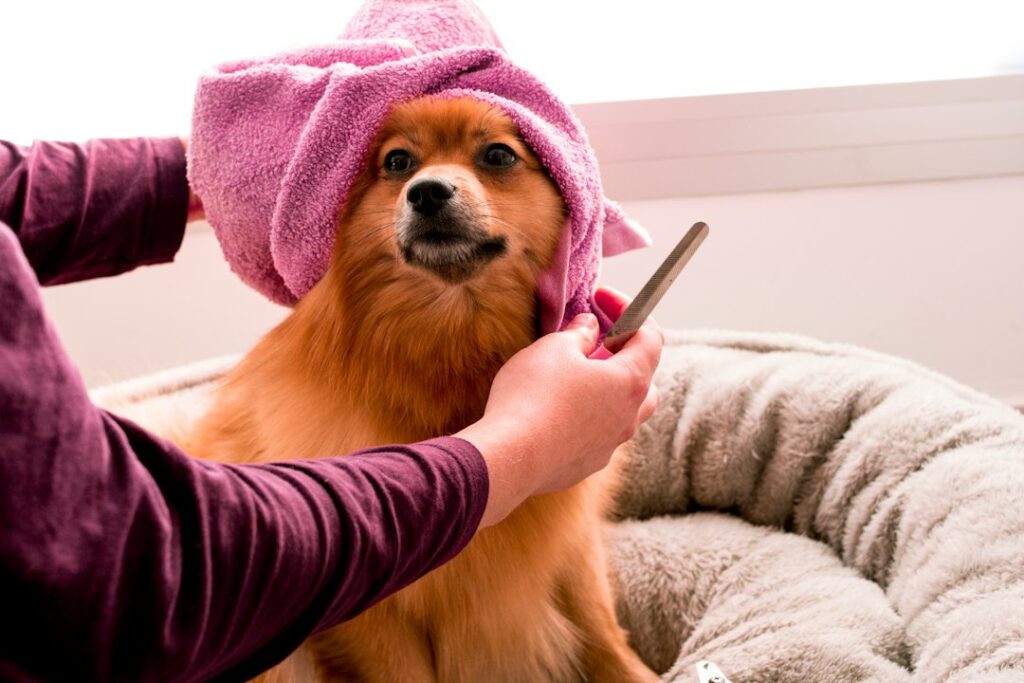
Grooming can become stressful when a dog or cat squirms, growls, snaps, hides, or refuses to cooperate. These reactions usually communicate fear, discomfort, confusion, or a lack of familiarity with handling—not stubbornness or “bad” behavior.
In Southern Pines, NC, pets may need regular grooming because of warm weather, seasonal shedding, pine pollen, outdoor activity, and the buildup of dirt or debris in the coat. A calm, gradual approach helps prevent grooming from becoming a struggle and makes future sessions safer.
Why do some pets resist grooming?
Most difficult grooming behavior has a cause. A pet may react because the equipment, restraint, water, sounds, or physical sensations feel unfamiliar or threatening.
Common triggers include:
- Clippers or dryers that vibrate, buzz, or blow air near the face
- Nail trimming, especially after a painful quick injury in the past
- Mats pulling at the skin
- Sensitive ears, paws, tail, or belly
- Slippery tubs and grooming tables
- Previous frightening experiences
- Arthritis, skin irritation, ear infections, or other pain
- Limited handling during puppyhood or kittenhood
- Anxiety caused by being separated from familiar people or animals
A pet that suddenly becomes difficult after previously tolerating grooming should be evaluated for pain or illness. A change in behavior can be an early sign that something hurts.
How can an owner tell whether a pet is afraid or aggressive?
Fearful behavior often appears before a bite or scratch. Recognizing early signals allows the session to pause before the pet feels trapped.
Signs of rising stress may include:
- Turning the head away
- Lip licking or repeated yawning
- Trembling, crouching, or trying to escape
- Flattened ears or a tucked tail
- Stiff posture
- Wide eyes with visible whites
- Panting when the room is not hot
- Growling, hissing, swatting, or snapping
A growl is useful information. It means the pet is uncomfortable and is asking for more distance. Punishing the growl can remove the warning without removing the fear, which may make a sudden bite more likely.
What should happen before the first grooming session?
Preparation should begin at home with short, low-pressure handling. The goal is not to complete a full haircut or nail trim immediately. The goal is to teach the pet that brief contact can be safe and predictable.
Start with one body area at a time. Touch a paw for one second, then release. Gently lift an ear, touch the tail, or run a soft brush over a small section of coat. Pair each calm response with a small food reward if the pet can eat comfortably while relaxed.
Practice should stop before the pet becomes distressed. Several 30-second sessions are usually more productive than one long session that ends in panic.
Useful home exercises include:
- Showing nail clippers without using them
- Turning a dryer on across the room for a few seconds
- Placing a brush beside the pet before touching the coat
- Letting the pet stand on a nonslip mat
- Handling paws after calm play or a walk
- Gently touching areas that will need regular inspection
Do not force the pet to remain still for extended periods. Restraint may be necessary for safety, but repeated forced exposure can strengthen fear.
How should a difficult pet be handled during grooming?
The safest approach is slow, predictable, and organized. Begin with the least sensitive tasks and save more challenging areas for later, if the pet remains calm.
A grooming session may work better when it follows this sequence:
1. Allow the pet to settle and sniff the room or equipment.
2. Start with calm touch on a comfortable area, such as the shoulder or back.
3. Use brief brushing before introducing clippers, water, or nail tools.
4. Keep movements steady and avoid sudden changes in position.
5. Pause when stress signals increase.
6. Give the pet a short break instead of continuing through resistance.
7. Finish with an easy, successful task whenever possible.
A nonslip surface is especially helpful. Slipping can make a pet feel trapped and can cause injury. Water temperature should be comfortably lukewarm, and air should never be directed forcefully into the face or ears.
For pets that react to noise, introduce tools while they are turned off. The tool can then be moved farther away while operating briefly. Gradual exposure is safer than turning on a loud dryer beside an already anxious animal.

What should never be done with a resistant pet?
Several common responses increase risk.
Do not:
- Hold a struggling animal tightly around the neck
- Continue cutting through severe matting without checking the skin
- Use scissors near a moving face, tongue, or paw
- Force open a mouth to silence a growl
- Chase a pet around the home with grooming tools
- Use human sedatives or leftover medication
- Assume a muzzle eliminates the need for careful handling
- Continue after repeated lunging, panic, or attempts to escape
A muzzle, when appropriate and properly introduced, may prevent a bite but does not reduce fear by itself. It should never be used to ignore warning signs or justify prolonged handling.
Severe mats require particular caution. Mats can hide inflamed skin, wounds, parasites, or moisture-related irritation. Pulling them apart with a brush may be painful, and cutting close to the skin can cause accidental lacerations.
When should grooming stop?
Grooming should stop when the pet cannot recover after a pause, repeatedly attempts to bite or scratch, shows signs of pain, or becomes so frightened that safe handling is no longer possible.
Other reasons to stop include:
- Rapid breathing that does not settle
- Collapse, weakness, or unusual lethargy
- Bleeding from a nail or skin injury
- Sudden vocalization during brushing or handling
- Severe redness, swelling, discharge, or foul odor
- A pet becoming overheated in a warm, poorly ventilated area
In Southern Pines, warm and humid conditions can make drying and coat maintenance more challenging, particularly for thick-coated pets. Grooming areas should have good airflow, and pets should not be left in direct heat while wet.
A veterinarian should evaluate pets with suspected pain, skin disease, ear problems, mobility concerns, or a sudden change in tolerance. Medication for grooming anxiety may be appropriate in some cases, but it should be selected and dosed by a veterinarian.
How can grooming become easier over time?
Progress depends on repetition without overwhelming the pet. Keep a simple record of what caused stress, how long the pet tolerated handling, and which rewards or pauses helped.
For example, a pet may tolerate brushing on the back but react when the legs are touched. Future practice should focus on brief leg handling rather than repeating a full grooming routine. Improvement may be measured in small steps: standing calmly for a few seconds, accepting a brush near the shoulder, or hearing clippers from a distance without retreating.
Regular coat checks are useful for local households whose pets spend time outdoors. Inspect paws, ears, underarms, collars, and areas beneath the tail for burrs, dampness, pine debris, tangles, or skin irritation. Catching problems early reduces the chance that grooming will become painful.
The practical goal is not to make every pet enjoy grooming. It is to create enough trust, predictability, and safety that necessary care can be completed without escalating fear or causing injury.