

 See My Latest Article on HelloNation
Why do some pets become anxious during grooming?
Pets may resist grooming because the experience combines unfamiliar sounds, handling, restraint, slippery surfaces, and sensations around sensitive areas. Clippers, dryers, nail tools, water, and brushing can all feel startling, especially when introduced suddenly.
A pet may also associate grooming with discomfort. Mats can pull at the skin, overgrown nails can make foot handling painful, and irritated ears or skin may be tender. Anxiety is not always a behavior problem; it can be a response to fear, pain, or a lack of familiarity.
Signs of grooming stress may include:
- Trembling, panting, hiding, or trying to escape
- Lip licking, yawning, drooling, or refusing treats
- Growling, snapping, scratching, or freezing in place
- Excessive vocalizing or repeated attempts to pull away
- Wide eyes, pinned-back ears, tucked tails, or stiff body posture
Recognizing these signs early helps prevent a manageable concern from becoming a stronger fear response.
How can grooming become more familiar at home?
The most effective preparation is gradual exposure. Practice handling for a few seconds at a time, then stop before the pet becomes overwhelmed. Pair each step with something the animal enjoys, such as a small treat, praise, play, or access to a favorite resting place.
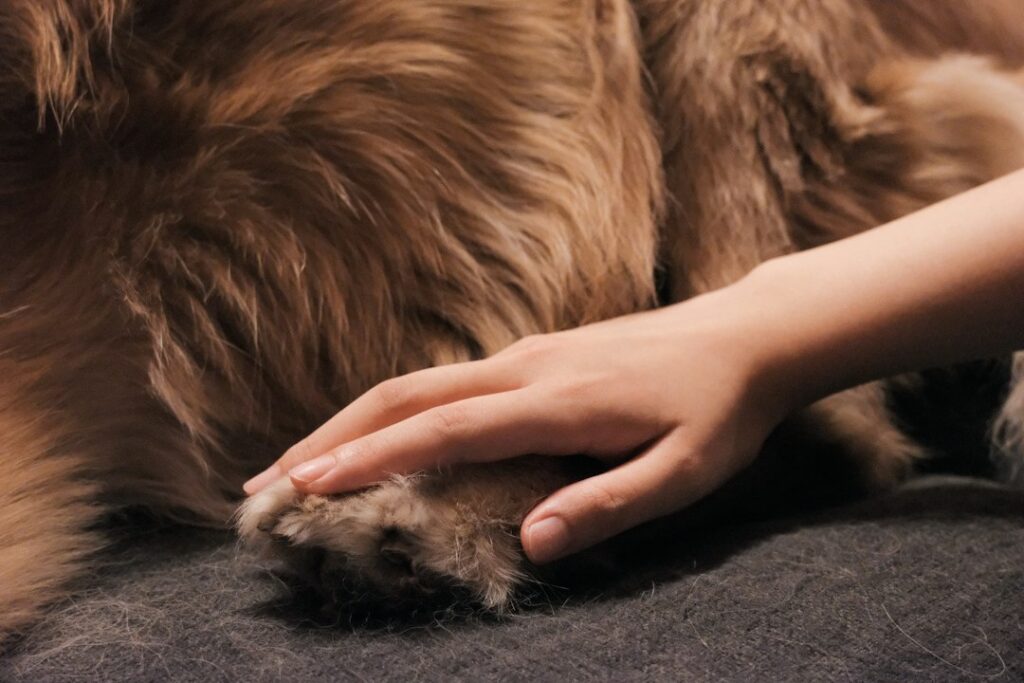
Begin with areas that are usually easy to touch. Gently handle the shoulders, back, legs, paws, ears, and tail without immediately brushing or trimming. If the pet pulls away, reduce the pressure and return to an easier area. The goal is to teach the animal that handling is predictable and temporary.
Short sessions are more useful than occasional, lengthy attempts. A few minutes several times a week can help a pet become comfortable with:
- Having paws held briefly
- Looking inside the ears without inserting anything
- Feeling a brush move through loose, untangled hair
- Hearing grooming tools from a distance
- Standing on a stable, nonslip surface
- Being touched around the face and chin
Never force a frightened pet to continue simply to finish a routine. Stopping while the animal is still coping helps preserve trust.
What is the safest way to introduce clippers, dryers, and other tools?
Tools should be introduced in stages. First, allow the pet to see and smell the tool while it is turned off. Next, operate it several feet away for a short time. Gradually reduce the distance only if the pet remains relaxed.
A quiet tool is not automatically a comfortable tool. The vibration of clippers and the movement of air from a dryer can be more concerning than the sound itself. Avoid directing strong airflow at the face, ears, or sensitive skin. Some pets tolerate towel drying better than forced air, while others become calmer with a low, steady airflow and frequent breaks.
A calm introduction may look like this:
1. Place the tool nearby without touching the pet.
2. Reward calm observation.
3. Turn the tool on briefly at a distance.
4. Turn it off before the pet becomes tense.
5. Repeat over several sessions.
6. Move closer only when the pet consistently remains comfortable.
For cats and small dogs, a secure surface with good traction can reduce panic. For larger dogs, grooming should take place in an area where the pet cannot slip or jump unexpectedly.
How can grooming be made easier in a Southern Pines, NC household?
Warm, humid weather can make thick coats, mats, and damp fur more uncomfortable. After bathing or outdoor activity, pets should be dried thoroughly, especially in skin folds, between paw pads, under collars, and beneath dense coats. Dampness trapped against the skin can contribute to irritation and odor.
Seasonal outdoor exposure may also bring sand, burrs, plant material, and debris into the coat. Checking the paws, legs, ears, and underside after walks can prevent small tangles from becoming painful mats. Regular brushing is usually easier for the pet than waiting until the coat requires extensive detangling.

Indoor conditions matter as well. Choose a grooming area with:
- A comfortable temperature
- Good lighting
- A nonslip mat or secure flooring
- Minimal household noise
- Enough room for the pet and handler to move safely
Avoid grooming immediately after vigorous exercise, during the hottest part of the day, or when the household is unusually busy. A pet that is tired but not overheated may be more cooperative, but exhaustion should never be used to force stillness.
What should owners do if a pet becomes stressed during grooming?
Pause as soon as stress begins to escalate. Lower the tool noise, remove the brush, offer space, and allow the pet to settle. A short break may be enough if the animal is mildly uneasy. If the pet continues trembling, panting heavily, attempting to bite, or trying to flee, end the session.
Returning to a simpler task can help. For example, after a pet reacts to nail handling, it may be better to offer a treat for calmly resting a paw on a towel rather than attempting another nail trim. Progress should be measured by relaxed behavior, not by how much grooming is completed in one session.
Avoid punishment, yelling, forced restraint, or chasing a pet around the home. These responses can make the grooming area and tools seem more threatening. They may also increase the chance of a defensive bite or injury.
How can grooming be less stressful for older pets or pets with health problems?
Older pets may have arthritis, reduced balance, hearing loss, vision changes, or skin sensitivity. Standing for long periods can be tiring or painful, and lifting a leg or bending the neck may cause discomfort. Grooming should include frequent rests and careful support.
Pets with thick coats, skin disease, ear problems, painful joints, recent surgery, or a history of aggression may need individualized handling. Do not cut through severe mats at home if doing so could pull the skin or cause accidental injury. Do not use calming medication, sedatives, or human products unless specifically directed by a veterinarian.
A sudden change in grooming tolerance deserves attention. A pet that previously accepted brushing but now cries, snaps, or avoids touch may be experiencing pain, an ear problem, skin irritation, or another health concern.
Should treats be used during grooming?
Yes, rewards can help create a positive association, but they should be used thoughtfully. Offer small, high-value treats for specific calm behaviors, such as standing still, relaxing the paw, looking at a tool, or allowing one brush stroke.
For pets that cannot eat during handling, use praise, a favorite toy, or a brief play break. Food should not be used to distract an animal from severe fear or pain. If the pet stops accepting a normally desirable reward, that is often a sign the session has become too difficult.
The most reliable goal is not complete stillness. It is a pet that can remain reasonably relaxed, recover quickly from mild surprises, and gradually tolerate routine care without feeling trapped or threatened.