

 See My Latest Article on HelloNation
Dogs do not all need the same bathing schedule. A practical routine depends on coat type, skin condition, outdoor habits, age, activity level, and how quickly the coat collects dirt or moisture. The goal is regular, comfortable cleansing with products and techniques that support healthy skin.
For households in Southern Pines, seasonal heat, humidity, sandy ground, pine debris, swimming, and frequent outdoor activity can all affect how often a dog needs a bath. A routine that works for a short-coated indoor dog may not suit a long-coated dog that spends much of the week outside.
How often should a dog be bathed?
Most dogs do well with a bathing schedule that ranges from every few weeks to every few months, adjusted as needed for the individual dog. Regular bathing can be healthy when the cleanser is gentle, the water is comfortable, and the coat is rinsed and dried thoroughly.
A dog may need more frequent bathing when the coat:
- Picks up sand, dust, pollen, or plant material
- Becomes oily or develops a noticeable odor
- Gets wet often from swimming or outdoor play
- Is long, thick, curly, or prone to tangling
- Collects mud around the legs, belly, or feet
- Is being managed under veterinary guidance for a skin concern
A dog that spends most of the time indoors and stays clean may need fewer full baths, with brushing and occasional spot cleaning between them. The schedule should be based on the coat’s condition rather than a fixed calendar alone.
How does coat type change the bathing routine?
Coat texture affects how dirt is held, how quickly moisture dries, and how much brushing is needed before and after bathing.
Short, smooth coats
Short-coated dogs often release loose dirt more easily, but they can still benefit from consistent bathing. Brushing before the bath removes dead hair and surface debris, while a soft towel or grooming mitt can help keep the coat clean between baths.
Double coats
Dogs with dense undercoats may hold moisture close to the skin after bathing. Thorough rinsing and drying are especially important. A bath should be paired with regular brushing to remove loose undercoat and reduce packed fur.
Dense coats can look dry on the surface while remaining damp underneath. Check areas such as the chest, neck, armpits, belly, and behind the legs before considering the dog fully dry.
Long or silky coats
Long coats can collect burrs, leaves, sand, and other debris. Brushing before bathing helps prevent small tangles from tightening during the wash. Afterward, the coat should be dried in sections and brushed gently as it returns to its natural shape.
Curly or wool-like coats
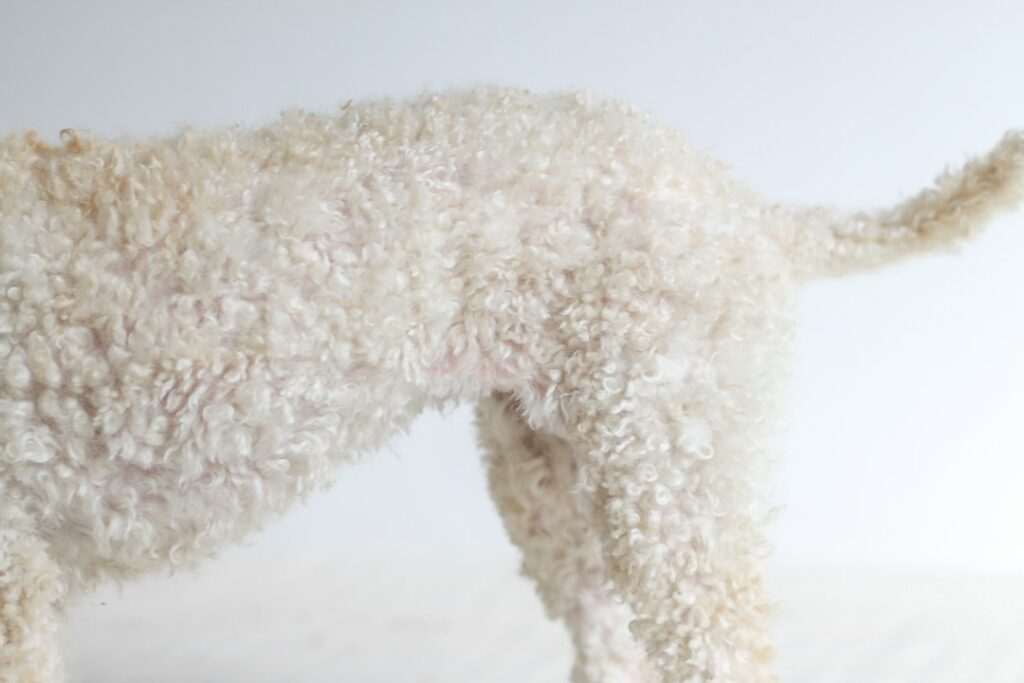
Curly coats may mat when dirt, moisture, and loose hair combine. These dogs often need a more structured routine that includes frequent brushing, careful pre-bath detangling, thorough rinsing, and complete drying.
A bath will not remove every mat safely. Tight mats can pull on the skin and may require careful clipping or other specialized handling rather than forceful brushing.
What should a bathing routine include?
A dependable routine has four stages: preparation, cleansing, rinsing, and drying. Each stage affects the comfort of the dog and the condition of the coat.
Before bathing:
- Brush out loose hair and manageable tangles.
- Gather towels, a nonslip mat, a cup or sprayer, and a gentle dog cleanser.
- Keep the room comfortably warm and remove drafts.
- Place cotton loosely at the outer ear openings only if needed to reduce splashing; never push anything into the ear canal.
- Test the water on the inside of the wrist. It should feel comfortably warm, not hot.
During the bath, wet the coat thoroughly before applying cleanser. Dense coats may require extra time for water to reach the skin. Use a small amount of product, work it through the coat with the fingertips, and avoid vigorous scrubbing that irritates the skin or creates tangles.
Keep cleanser away from the eyes, mouth, and inside of the ears. The face can usually be cleaned with a damp cloth or a small amount of diluted cleanser applied carefully around the muzzle.
Rinsing deserves as much attention as washing. Product left in the coat can cause itching, flaking, or a sticky texture. Continue rinsing until the water runs clear and the coat feels clean rather than slippery.
Why does drying matter so much?
A dog should be dried thoroughly after every full bath. Remaining moisture can encourage discomfort, tangling, and skin problems, particularly in dense coats, skin folds, and areas with limited airflow.

Begin by pressing towels against the coat instead of rubbing aggressively. Excessive rubbing can tangle long or curly hair. A dryer may be useful if the dog accepts it, but use a low or moderate setting, keep the airflow moving, and avoid concentrating heat on one area.
Watch the dog’s body language. Panting, trying to escape, trembling, flattened ears, or repeated lip licking may signal stress or discomfort. Short, calm drying sessions may be more successful than forcing the entire process quickly.
Dogs that swim or play in wet grass may need targeted drying even when a full bath is not necessary. Pay attention to the belly, feet, ears, collar area, and skin folds.
How should outdoor conditions affect bathing?
Southern Pines households may notice that bathing needs change throughout the year. Warm, humid periods can make dogs feel oily or uncomfortable sooner, while dry outdoor conditions may leave sandy residue in the coat. Pine needles, pollen, and yard debris can also become trapped in longer fur.
After outdoor activities, inspect the dog before reaching for a full bath. A brush-out, paw rinse, damp cloth, or clean-water rinse may be enough for minor debris. A full bath is more appropriate when the coat has odor, visible residue, mud, or substances that brushing cannot remove.
Swimming requires special attention. Rinse the coat with clean water after swimming to remove residue, then dry thoroughly. Do not assume that a dog is clean simply because the water looked clear.
What products are appropriate for regular bathing?
Use products made specifically for dogs and selected for the dog’s coat and skin needs. Human shampoos are not a reliable substitute because their formulation may not suit canine skin.
A mild cleansing product is usually appropriate for routine baths. Dogs with allergies, recurring itching, scaling, strong odor, or diagnosed skin conditions may need a veterinary-directed product and schedule. Medicated cleansers often require specific contact time and rinsing instructions.
Avoid using household cleaners, heavily fragranced products, essential oils, or flea products outside their labeled directions. Natural does not automatically mean gentle or safe for every dog.
When should the routine be adjusted?
A bathing plan should change if the dog’s coat, skin, or lifestyle changes. Reassess the routine after:
- A move from mostly indoor living to regular outdoor activity
- Seasonal increases in heat, humidity, pollen, or swimming
- A new haircut or coat length
- A change in diet, medication, or diagnosed skin condition
- Repeated matting or difficulty drying the coat
- Persistent odor soon after bathing
Frequent scratching, redness, sores, hair loss, strong ear odor, or repeated skin irritation should not be treated only by adding more baths. These signs may require veterinary evaluation to identify the underlying cause.
How can owners make baths easier for the dog?
Consistency usually works better than waiting until the dog is heavily soiled. Keep sessions calm, use the same sequence each time, and reward cooperation with praise or small treats when appropriate.
Puppies, older dogs, and dogs with limited mobility may need extra support on slippery surfaces. A nonslip mat and controlled water flow can reduce anxiety and help prevent falls. Dogs that become highly distressed, panic around water, or cannot be safely handled may need a slower desensitization plan and skilled grooming assistance.
A useful routine is not the one with the most baths. It is the one that keeps the coat clean, the skin comfortable, the dog fully dry, and the process manageable for the household.